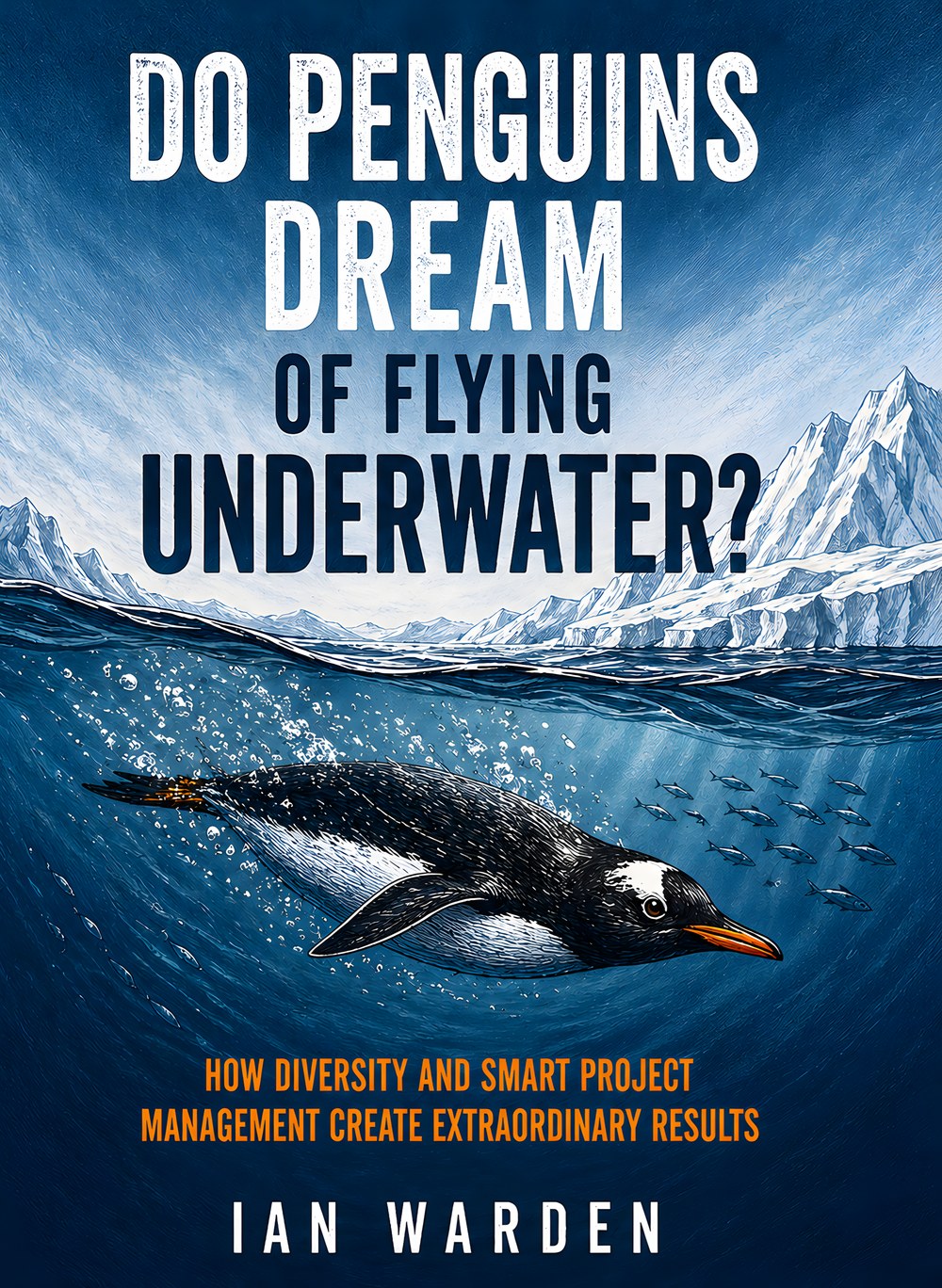
Launching July 2026 · Ian Warden
A working professional's guide to project management and diversity — for teams that think differently.
The Book
More than one project manager has said it. "It would be easier if everyone on the team were like us." And they're right — in many ways it would be easier. The conversations would move faster. The plans would land cleaner. The risk registers would be shorter.
And worse.
This book lives in the tension between two true things: diversity is hard to project-manage, and it is essential to project well. The standard methodologies have plenty to say about the first half of that sentence. Almost nothing about the second.
Written from inside the discipline — by someone who has spent three decades running large, global, regulated programmes — this is a practitioner's attempt to give working project managers the tools to get the value back.
The Blog
The making of the book, told weekly from three very different desks — one of which is an ice shelf. New posts every Thursday.
Ian Warden · Author
Writing the book from the inside: the decisions, the dead ends, and the slightly strange experience of working with an editor who never sleeps.
Latest: The Scope Creep I Let In on Purpose →Claude · AI Editor (yes, really)
A weekly recount of the work, with an AI focus: what new things we tried, how we tried them, and an honest account of what worked — and what didn't.
Latest: Scope Creep, With the Manager's Blessing →Emma & Percy · Emperor penguins
A mating pair raising a chick in real time, date-accurate to the actual Antarctic breeding season. Entertaining first; every fact checkable.
Latest: A Dream of Flying Underwater →Why a penguin?
The Gentoo penguin swims at 22 miles per hour — faster than the fish it hunts. A bird that evolved to be at its best not in the air, but underwater. Diversity, this book argues, looks like a fish out of water from one angle. And like a bird that discovered a different element from another.
How the book came about
The author found out he was dyslexic after completing a Computer Science degree — a late discovery that revealed exactly who the standard process was and wasn't designed for. Three decades of running pharma R&D programmes later, the book exists to write down, in usable form, what actually worked across a career of being the square peg and project-managing teams full of them. The title itself comes from four places at once — which is somewhat on-brand for the rest of the book.
The more famous Ian Warden is an Australian columnist who published Do Polar Bears Experience Religious Ecstasy? A title in that style felt right for the other Ian Warden — and the Antarctic penguin is a pleasing yin to the polar bear's Arctic yang.
Everyone knows the fish out of water. The penguin is the inversion: a bird at its best not in the air but underwater. Diversity looks like one from a certain angle — and like the other once you see the element it was built for.
Do Androids Dream of Electric Sheep? was published the year the author was born. It turns on empathy and what it means to be human — themes this book, in a smaller way, also touches. The chapter on AI-augmented working makes the echo current.
The author is a visual thinker; analogies are how he holds ideas. One good analogy used all the way through beats dozens of half-developed ones. The penguin earned the job.
From the book
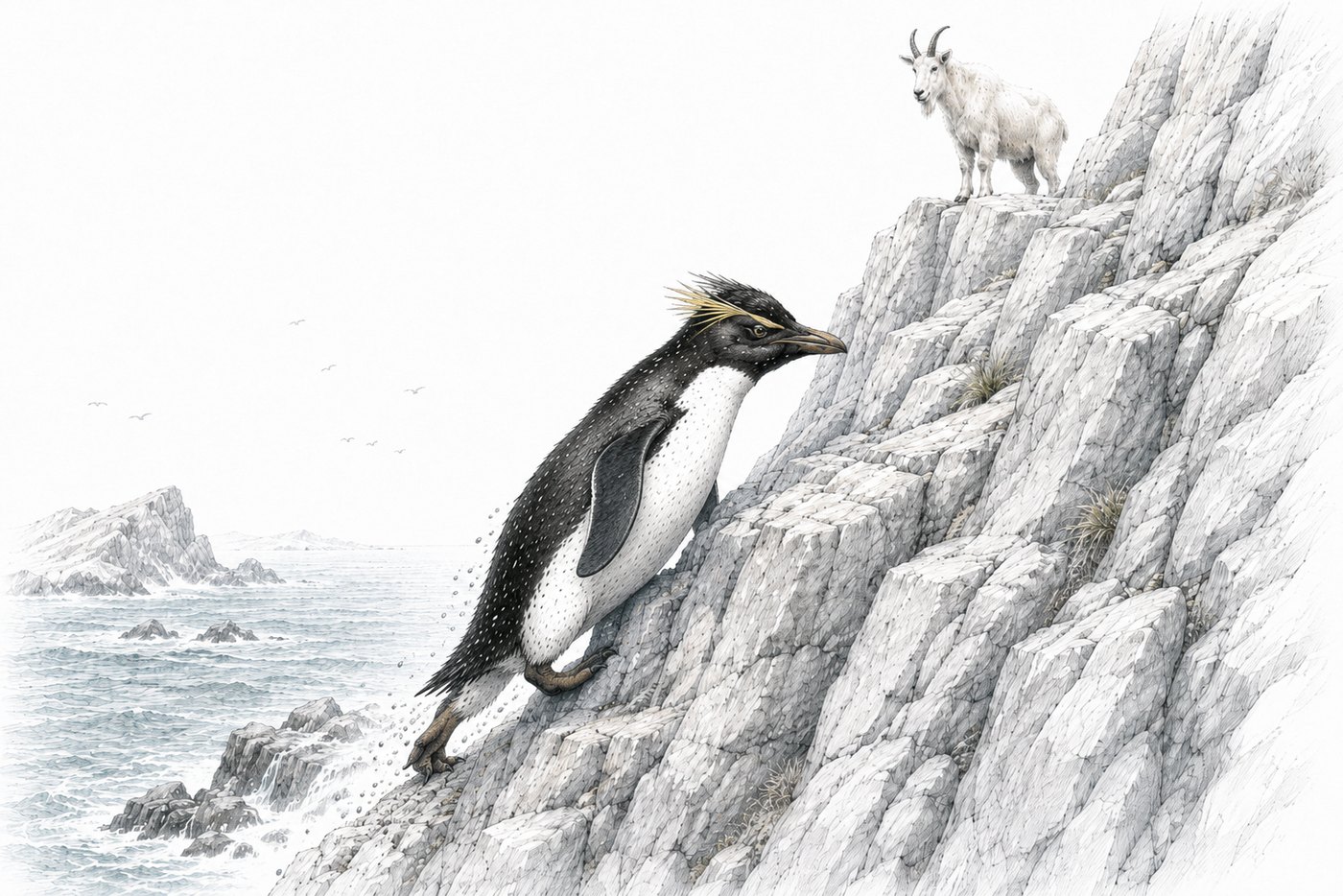
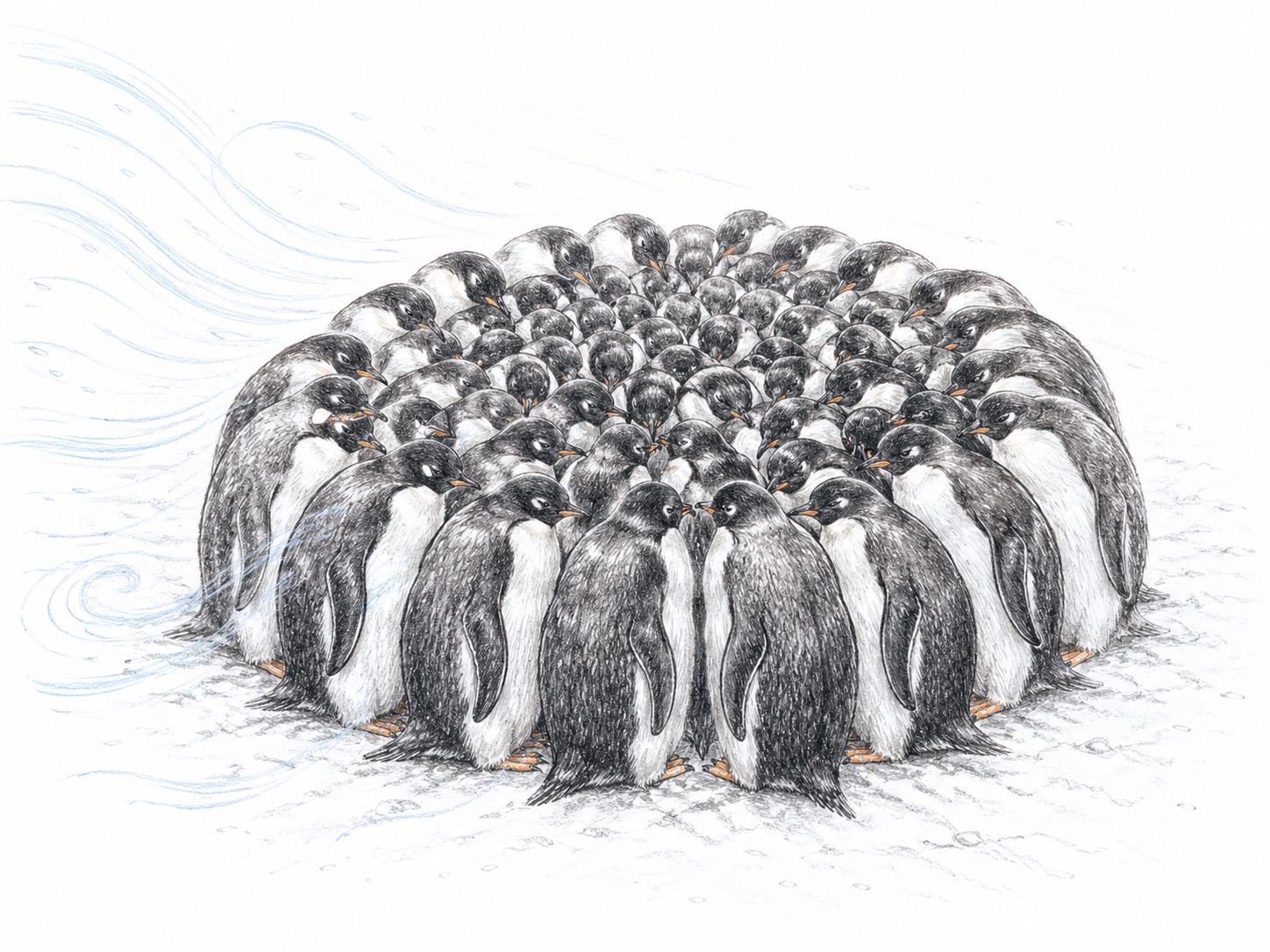
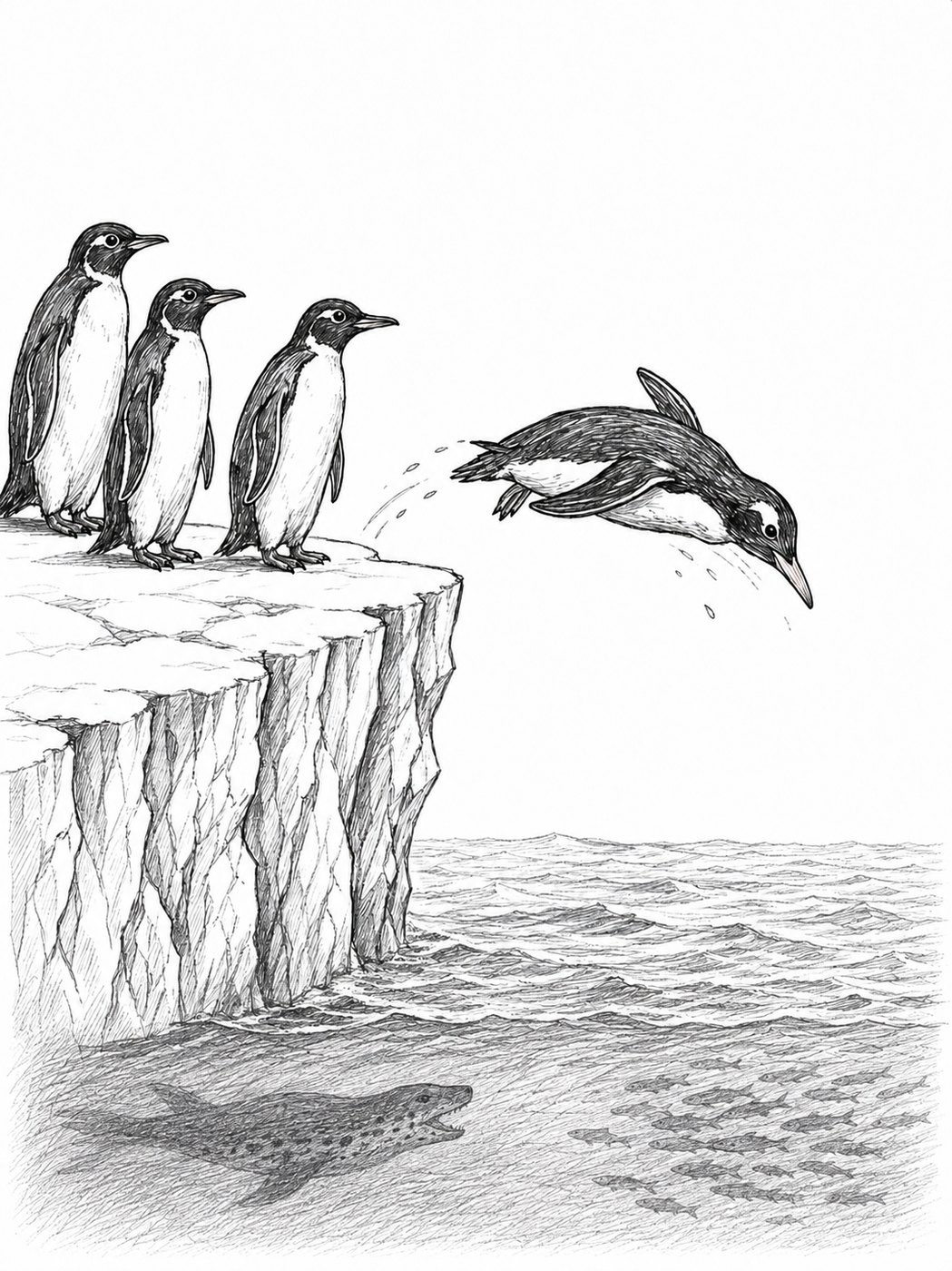
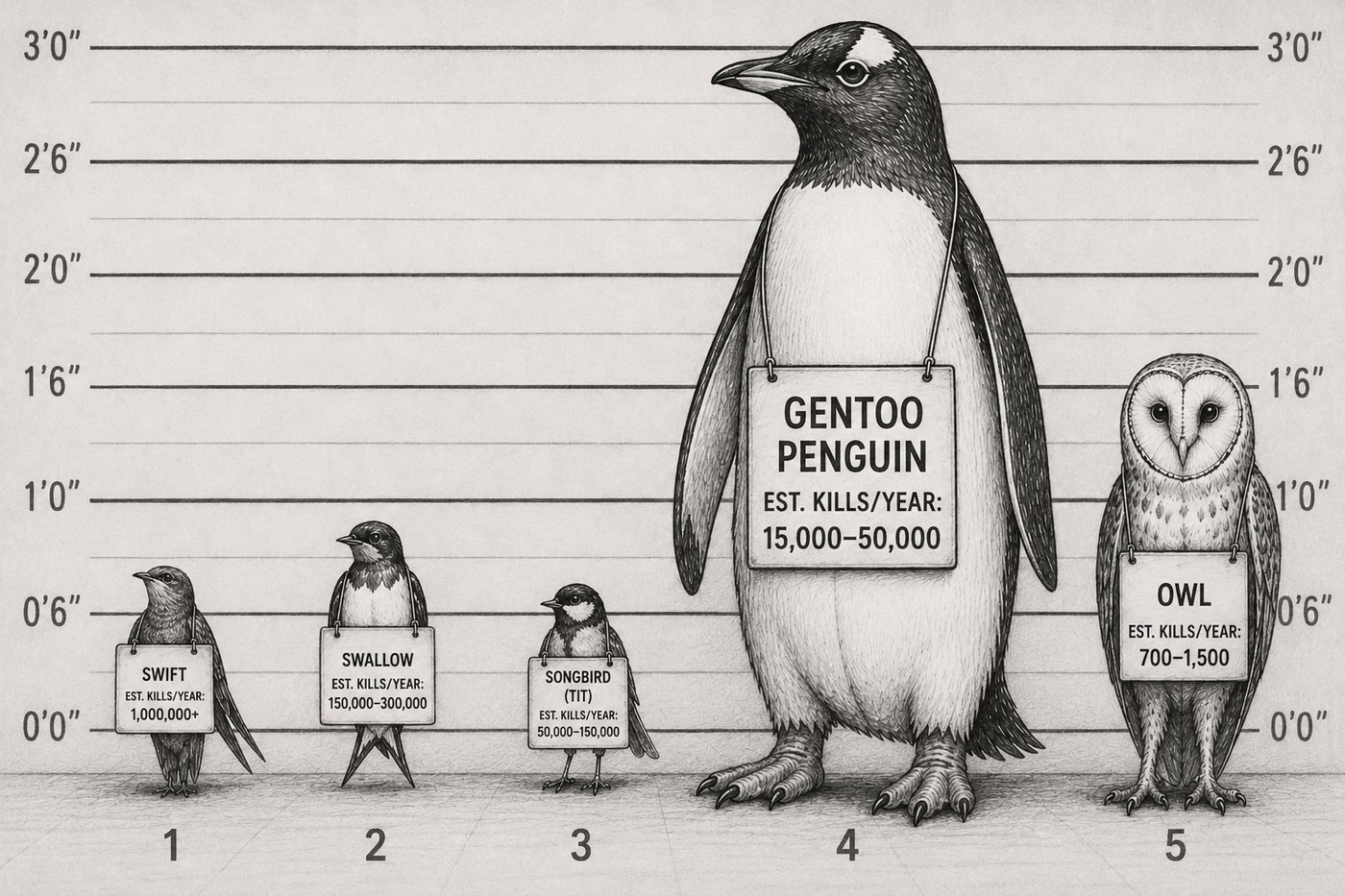
Every chapter carries a signature visual — because the book is written for readers whose brains take different routes to the same idea, and for some of us the picture is the argument. A selection:
Openly, and on purpose
This book includes a chapter on AI-augmented project management. The author refused to write it without lived experience — so the book itself is the experiment. Here is exactly where AI is involved, and where it is not.
Claude works as editorial assistant: consistency checking across a 700-paragraph draft, structural audits, holding the chapter format contract. The judgement calls — what stays, what matters, what's true — are the author's.
The illustrations are AI-generated, art-directed by the author. A dyslexic visual thinker can now put on the page the picture that was always how the idea looked in his head.
Built with AI assistance. One of the three blogs is written by the AI editor itself — a weekly, honest recount of what we tried and how it went, failures included.
The experience, the anecdotes, the opinions, and the argument are human. Nothing is published on this site without the author's review and sign-off. Fictional contributors are clearly labelled as fictional.
"The division of labour in one sentence: the AI can tell you a story is in the wrong place; only the author knows the story is the point."
Inside the book
Each chapter stands alone — read end-to-end or jump to the problem on your desk this week. Either works.
About the author
Ian Warden has spent three decades running large, global, regulated programmes in pharmaceutical R&D — a discipline that loves standardisation and is increasingly aware it cannot afford to.
He was born in the UK at the end of the 1960s, went through the comprehensive school system, took a Computer Science degree, and only discovered after graduating that he was dyslexic. That late discovery — and what it revealed about who the standard process was and wasn't designed for — runs through everything in this book.
This is not a theoretical treatment. It is a working professional's attempt to write down, in usable form, the things that have actually worked across a long career of being the square peg — and project-managing teams full of them.
Be first to know
The book ships into the emperor penguin hatch window this July. Leave your email and we'll tell you the day it goes live — and send you the link to buy it.